
Social Skill Training in Mumbai
Social Skills Training helps children build confidence in communication, interaction, sharing, and taking turns. It teaches them to express themselves, understand others, and develop positive relationships in everyday situations..
Social Skills Training in Mumbai by Dr. Priti Mhatre
Every child learns to connect, communicate, and build relationships in their own time — and at — Dr. Priti Mhatre’s Child Development Clinic we're here to support that journey, not rush it. If your child struggles with making friends, understanding social cues, holding conversations, or expressing themselves confidently around others, you don't have to figure it out on your own.
Dr. Priti Mhatre, a leading developmental pediatrician in Mumbai, offers social skills training in Mumbai through personalized, child-friendly sessions designed around each child's unique developmental needs, combining clinical expertise with hands-on, engaging techniques that make learning social interaction feel natural rather than forced. With timely intervention and consistent support, children can gain the confidence and social awareness they need to build meaningful connections and thrive in the world around them.
Meet the Developmental Pediatrician Behind Mumbai's Trusted Child Development Clinic
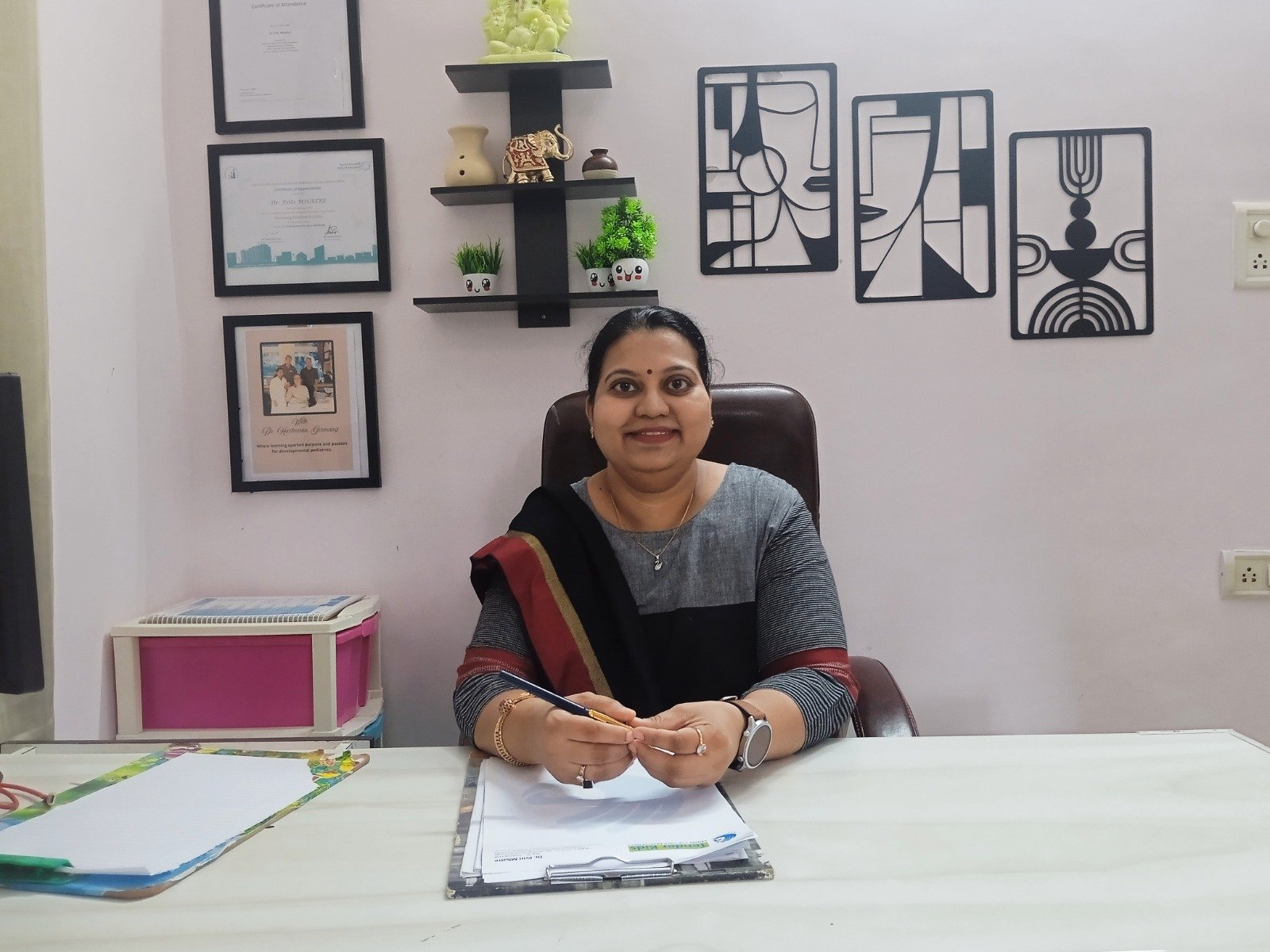
- Qualification
- MBBS, DCH, PGD in Developmental Pediatrics
- Experience
- Founder and Lead Developmental Pediatrician at Dr. Priti Mhatre's Child Development Clinic, providing specialized care in autism, ADHD, speech delays, and developmental disorders for over 10+ years
- Our Clinics
Book Your Consultation
Share a few details about your child and our team will call you back to guide you through the next step.
Your details
What Is Social Skills Training?
Social skills training is a specialized approach that helps children who face challenges with connecting, communicating, and interacting effectively with others. Every child's social development journey is different — some may struggle with reading facial expressions or body language, others find it hard to initiate or hold a conversation, and some understand social situations far better than they're able to respond to them.
Some children need only a few months of focused sessions to catch up, while others require longer, more structured support to reach their social and communication milestones. Difficulty with social skills isn't something to be anxious about — it's simply an area where a child needs the right guidance, and with timely evaluation and personalized training, every child can learn to express themselves clearly and confidently, and build meaningful connections with the world around them.
- Improves social awareness, communication & peer interaction
- Support needs range from mild social hesitancy to significant challenges
- Can occur alongside autism, ADHD, or developmental delays
Signs & Symptoms Social Skills Delay in Children
Every child develops social and communication skills at their own pace, but certain signs can indicate a delay that needs attention. Catching these signs early — regardless of the age at which they appear — makes a real difference in how quickly a child catches up. Here's what to watch for at different stages of childhood.
Signs in Toddlers (1–3Years)
- Little to no interest in interacting or making eye contact with others
- Doesn't respond to their name or engage in simple back-and-forth play
- Doesn't point, wave, or use gestures to communicate needs
- Loses previously acquired social behaviors or interest in others at any age
Signs in Preschool & School-Age Children (3–12 Years)
- Difficulty making or keeping friends compared to same-age peers (by 4–5 years)
- Struggles to take turns, share, or follow group play situations (by 3–5 years)
- Doesn't pick up on facial expressions, tone of voice, or body language (by 6–8 years)
- Trouble understanding classroom social norms or group instructions (by 6–12 years)
Signs in Teens & Adolescents (13–19 Years)
- Difficulty reading social cues, sarcasm, or unspoken social rules
- Avoiding group conversations, teamwork, or social situations altogether
- Persistent awkwardness or self-consciousness in social interactions
- Trouble understanding jokes, indirect language, or others' perspectives
Levels of Social Skills Delay
Social skills delay isn't one-size-fits-all — every child's social development journey looks a little different. Social communication difficulties are generally grouped into mild, moderate, and significant levels, depending on how much support a child needs to interact clearly and confidently. These levels aren't labels that define a child — they're simply a starting point for building the right therapy plan, one that can change and grow as your child does.
Level 1: Mild Delay
Often noticed as "slightly reserved" social behavior
Your child may take a little longer to initiate conversations or read social cues, but with focused social skills sessions and consistent practice at home, they often catch up quickly and confidently.
Level 2: Moderate Delay
Often called "moderate" social challenges
Your child may need regular sessions to build conversation skills, turn-taking, or peer interaction. With a consistent therapy routine and family involvement, they steadily gain confidence and social ease.
Level 3: Significant Delay
Often called "significant" social challenges
Your child may need close, regular therapy to develop functional social communication skills. Our team works closely with families to build a warm, consistent social skills training plan tailored to their pace and needs.
A child's social skills can improve significantly with the right therapy, environment, and consistency — it's a starting point for care, never a ceiling on their potential.
Causes & Risk Factors of Social Skills Delay
Many parents ask, "why does my child struggle to connect with others their age?" — and it's a completely natural question to have. The truth is that social skills delays can stem from a variety of causes, and in most cases, there's nothing a parent did or could have done differently.
Developmental & Genetic Factors
A family history of social, communication, or learning difficulties can increase the likelihood of delays in a child. Certain developmental conditions, including autism spectrum disorder, ADHD, or global developmental delay, can also affect how a child learns to read social cues and interact with others.
Sensory & Physical Factors
Sensory sensitivities, undiagnosed hearing loss, or difficulty processing sounds and visual cues can directly impact a child's ability to pick up on facial expressions, tone of voice, and body language. Premature birth or low birth weight can also contribute to delayed social-emotional milestones.
Differences in Brain Processing
Social interaction relies on specific areas of the brain that process facial expressions, interpret tone and intent, and help organize appropriate social responses. When these areas develop or function differently, it can affect how easily a child picks up social skills — which is why every child's social journey looks a little different. .
Myth-busting: Social skills delay is not caused by lazy parenting, too much screen time alone, or simply being a "shy child" who will outgrow it without help. While some children do become more socially confident naturally, it's always safer to get a professional evaluation early rather than wait and hope.
Social Skills Training Options We Offer
Social Skills Training in Mumbai Options We Offer Every child interacts differently — that's why we build a personalized mix of evidence-based techniques around your child's specific social and communication needs. Here's what's included in our social skills training program.
Occupational Therapy
Works alongside social skills training to build sensory processing, focus, and self-regulation — all of which support smoother, more confident social interaction.
ABA Therapy
Uses structured, positive reinforcement techniques to help non-verbal or minimally verbal children build functional communication and social interaction skills.
Special Education Support
A customized learning plan that reinforces social and communication goals through classroom-friendly strategies, both at the clinic and in school settings.
Social Communication Therapy
Helps children who struggle to read facial expressions, tone, or body language, using targeted exercises to improve social understanding and confidence.
Language Therapy
Supports children who struggle to understand or use language in social situations, building vocabulary, conversation skills, and comprehension step by step.
Parent Training & Home Practice
We coach parents and caregivers with simple, practical exercises to reinforce social skills progress consistently, right at home.
Managing Co-occurring Conditions
Many children with social skills delays also experience speech difficulties, autism, or developmental delays — we assess and manage these alongside core social skills training.
What Parents Say About Us
Real, unedited reviews from families we’ve worked with — pulled directly from our Google Business Profile.
Posted on Google![]()
Sambhaji KoliTrustindex verifies that the original source of the review is Google.
We were concerned because our daughter avoided eye contact, preferred to play by herself, and rarely responded when we called her name. The assessment process was thorough and helped us understand that she was on the autism spectrum. What I appreciated was that Dr. Priti explained everything calmly and gave us a clear roadmap instead of overwhelming us. She recommended speech therapy and occupational therapy based on our child's needs. Looking back, starting intervention early was one of the best decisions we made. We stay in Sanpada and were relieved to find someone with this level of expertise nearby.Posted on Google![]()
King Of All GamerTrustindex verifies that the original source of the review is Google.
The aba therapist is well knowledgeable and is quite professional in her approach. I m taking their services for my teenage son and she is handling him well so far for development of social skills / communication skills/ overall confidence.Posted on Google![]()
Rajesh KoliTrustindex verifies that the original source of the review is Google.
My son was almost 3 years old and was speaking only a handful of words. Family members kept telling us that boys speak late, but as parents we felt something wasn't right. After consulting Dr. Priti, we understood that he had a language delay and needed early intervention. She guided us towards speech therapy and gave us practical suggestions to work on at home. It has been several months now and we are seeing noticeable improvement in his communication. We usually travel from Vashi for his sessions and it has been completely worth it.Posted on Google![]()
JyotiTrustindex verifies that the original source of the review is Google.
Dr.priti mhatre is very knowledgeable, kind person and entire team (i.e therpiest staff,reception)everyone are very helpful, supporting. From day one we feel our child is in very safe and lovable person's hand.they help us in each and every step of our child growth the staff treat kids like family person. With all there support and guidance we successful in our child treatment. Once again thank you so much priti ma'am.Posted on Google![]()
vishal patilTrustindex verifies that the original source of the review is Google.
Good occupational therapists.....Posted on Google![]()
mahima gauravTrustindex verifies that the original source of the review is Google.
She is very honest doctor. She understands issues and give relevant solutions.Posted on Google![]()
Pratiksha KhandareTrustindex verifies that the original source of the review is Google.
Best therapy center for speech,occupational and ABA therapy..dr priti mhatre very caring and attentive...if your child is facing any development issue.. I will highly recommend to take dr priti mhatre's consultation...
What to Expect: Cost & Cost & Duration of Social Skills Training in Mumbai
Every family wants to know two things upfront — what it costs, and how long it takes. There's no single answer, since every child's training plan is different, but here's an honest picture of what typically shapes both.
What Affects the Cost of Training
Social skills training cost in Mumbai varies based on a few key factors:
- Type of challenge being addressed (peer interaction, communication, social cues, or a combination)
- Number of sessions needed per week
- Whether one-on-one or group sessions are recommended
- Any additional assessments or co-occurring conditions being managed
We provide a clear, itemized cost estimate after your child's initial assessment — so there are no surprises before you begin.
How Long Does Training Take?
Social skills training isn't a fixed-term program — it's a gradual process that adjusts as your child progresses. That said, most families can expect:
- Early signs (weeks 1–4): Small, noticeable shifts in eye contact, engagement, or willingness to interact
- Short-term progress (3–6 months): Measurable gains in conversation skills, turn-taking, or peer interaction
- Long-term development (1+ year): Sustained growth in confidence, social ease, and everyday relationships
Good to know: Progress isn't always linear, and that's completely normal. Consistency matters far more than speed — our team reviews your child's training plan regularly to make sure it stays effective and relevant as they grow.
Expert Speaks: Dr. Priti Mhatre
Quick, practical insights on autism, child development, and everyday parenting questions — straight from Dr. Priti Mhatre.
Frequently Asked Questions
Answers to the questions parents ask us most often about Social Skill Training in Mumbai
At what age should I consider social skills training for my child?
Social skills training can benefit children as young as 2–3 years old, especially if you notice limited eye contact, low interest in interacting, or difficulty with simple back-and-forth play. That said, it's never too late to start — many children begin therapy in the preschool years, school-age years, or even adolescence, depending on when signs are first noticed.
Is social skills training only for children with autism?
No. While social skills training is commonly recommended for children with autism, it also helps children with ADHD, developmental delays, social anxiety, or those who simply need extra support building confidence in social situations — with no formal diagnosis required.
How is social skills training different from speech therapy?
Speech therapy focuses on producing and understanding language — sounds, words, and sentences. Social skills training focuses on how a child uses communication in real interactions — reading social cues, taking turns, making friends, and understanding unspoken social rules. Many children benefit from both together.
How long does it take to see improvement?
Most families notice small shifts in engagement and interaction within the first 4–6 weeks, with more measurable progress in conversation and peer interaction over 3–6 months. Long-term social confidence typically builds over a year or more, depending on the child's starting point and consistency of sessions.
Do parents need to be involved in the therapy process?
Yes — parent involvement significantly speeds up progress. We coach parents and caregivers with simple, practical strategies to reinforce social skills at home, in everyday situations like family time, playdates, and school interactions.
What are the signs my child needs social skills training?
Common signs include difficulty making friends, avoiding group activities, trouble reading facial expressions or tone of voice, and discomfort in conversations — often noticed more clearly once a child starts school.
Can social skills be taught, or are they natural?
Social skills are a mix of natural development and learned behavior. Just like speech or motor skills, children can be explicitly taught social skills through structured practice, modeling, and repetition — especially when development doesn't happen naturally on its own.
Is social skills training covered by insurance in India?
Coverage varies by insurer and policy. Some health insurance plans cover developmental therapies when linked to a diagnosed condition like autism or ADHD, but many social skills programs are paid out-of-pocket in India — it's best to check directly with your provider.
What happens during a social skills training session?
Sessions are typically play-based and interactive, using role-play, group activities, and real-life scenarios to practice things like conversation starters, sharing, turn-taking, and interpreting social cues in a supportive, low-pressure setting.
Can adults benefit from social skills training too?
Yes — while this page focuses on children, social skills training is equally effective for teens and adults working on workplace communication, social anxiety, or building confidence in personal relationships.
Our Clinic Locations
Conveniently located across Navi Mumbai and Thane — book a visit at whichever clinic works best for your family.
Navi Mumbai Clinic
Dr. Priti Mhatre’s Child Development Clinic — our main centre for autism diagnosis, ABA, speech, and occupational therapy.
Thane Clinic
Dr. Priti Mhatre’s Child Development Clinic — full developmental assessment and therapy services, closer to Thane families.