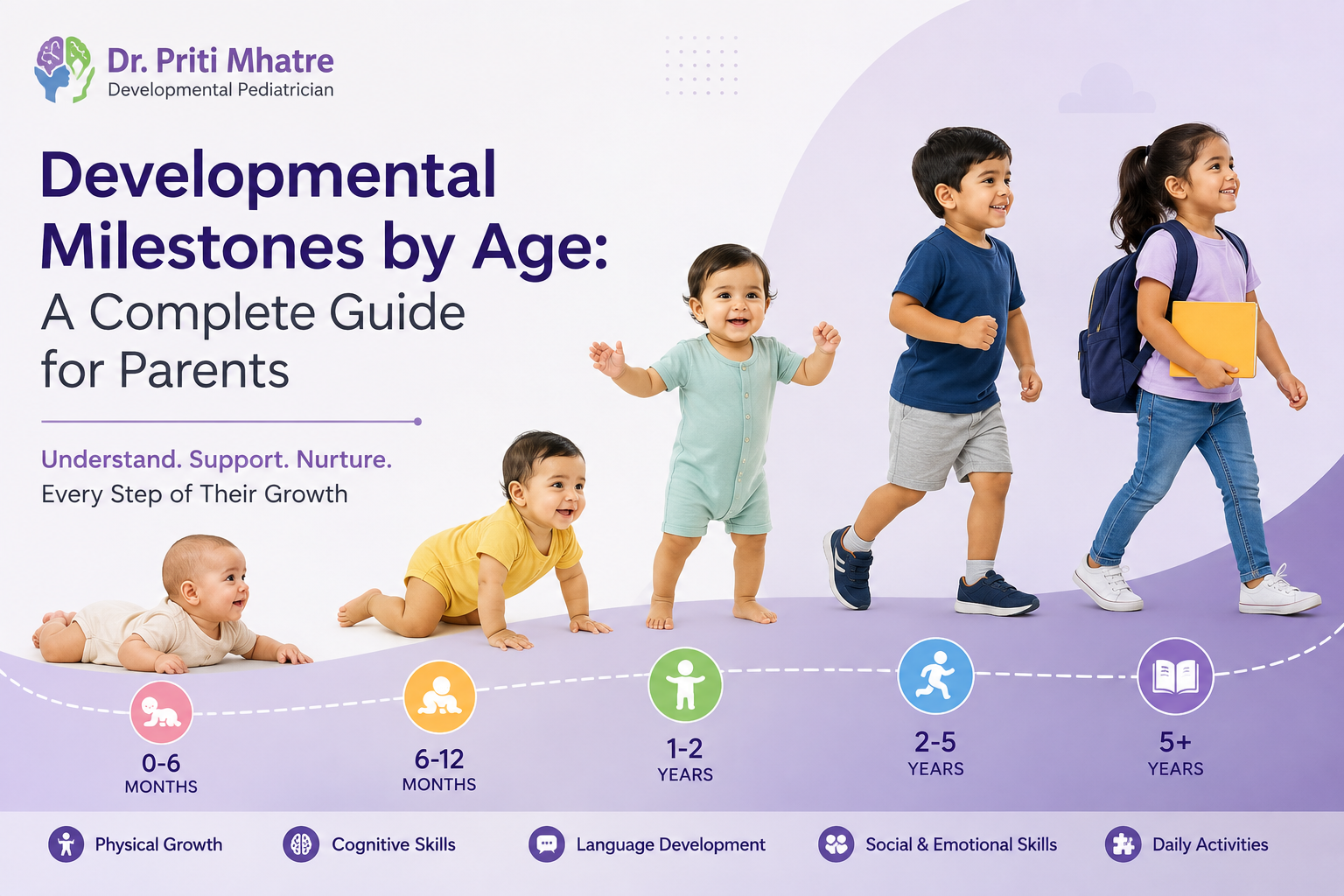
Watching your child grow is one of the most rewarding parts of parenting. Every giggle, every wobbly first step, and every new word feels like a small miracle. But along with the joy, many parents also feel a quiet worry: “Is my child developing at the right pace?”
This is where understanding developmental milestones becomes so important. Developmental milestones are the skills and behaviors most children reach by a certain age, covering physical, cognitive, social, and emotional growth. While every child grows at their own pace, knowing what to expect at each stage helps parents recognize healthy progress and identify potential concerns early.
In this guide, we’ll walk through developmental milestones by age, explain why tracking them matters, and share simple tips to support your child’s growth.
Why Developmental Milestones Matter
Milestones act like signposts. They don’t predict a child’s future intelligence or personality, but they do offer a helpful checkpoint for parents and Developmental pediatricians. Early identification of delays can make a significant difference, since the first few years of life are when a child’s brain develops most rapidly.
Regularly tracking milestones allows you to:
- Celebrate your child’s unique progress
- Identify areas that may need extra support
- Have informed conversations with your Developmental pediatrician
- Feel more confident as a parent
Now, let’s break down what to expect at each stage.
Developmental Milestones by Age
0–3 Months
At this stage, babies are adjusting to life outside the womb. You may notice them:
- Lifting their head briefly during tummy time
- Following objects with their eyes
- Smiling in response to voices or faces
- Making cooing sounds
4–6 Months
This is often when personality starts to shine through. Common milestones include:
- Rolling over from tummy to back
- Reaching for and grasping toys
- Laughing and babbling
- Recognizing familiar faces
7–12 Months
Mobility becomes a major focus during this period. Babies typically begin:
- Sitting without support
- Crawling or scooting
- Pulling themselves up to stand
- Saying simple words like “mama” or “dada”
- Responding to their name
1–2 Years
Toddlers become more independent and communicative. Look out for:
- Walking independently
- Using 10–20 words, growing to short phrases
- Pointing to objects they want
- Imitating actions like clapping or waving
- Showing interest in other children
2–3 Years
This is a period of rapid language and motor development. Common signs include:
- Running and climbing confidently
- Forming two- to three-word sentences
- Following simple instructions
- Engaging in pretend play
- Showing early signs of independence, like wanting to feed themselves
3–5 Years
By preschool age, children develop more advanced physical, social, and thinking skills, such as:
- Hopping, balancing, and pedaling a tricycle
- Speaking in full sentences
- Asking frequent questions (“why?”)
- Playing cooperatively with other children
- Recognizing shapes, colors, and numbers
What If My Child Isn’t Meeting a Milestone?
It’s natural to compare your child to others, but remember that development isn’t a race. Some children walk earlier and talk later, while others follow the opposite pattern. However, if your child shows a significant delay in multiple areas, or loses a skill they previously had, it’s worth discussing with a Developmental Pediatrician.
Early intervention services can make a meaningful difference, and reaching out early is always better than waiting.
Tips to Support Healthy Development
You don’t need expensive toys or programs to support your child’s growth. Simple, everyday interactions often matter most:
- Talk and read often – Even before babies can respond, hearing language builds vocabulary and comprehension skills.
- Encourage movement – Tummy time, crawling space, and outdoor play strengthen muscles and coordination.
- Limit screen time – Especially for children under two, real-world interaction supports brain development better than screens.
- Follow their lead in play – Let your child explore and make choices; this builds confidence and problem-solving skills.
- Maintain consistent routines – Predictable schedules for sleep, meals, and play help children feel secure.
Conclusion
Every child’s developmental journey is unique, and milestones are meant to guide, not pressure. By understanding developmental milestones by age, you can better support your child’s growth while knowing when it might be time to seek professional guidance.
If you ever have concerns about your child’s development, don’t hesitate to consult a Developmental Pediatric Specialist. Early awareness and support can set the foundation for a lifetime of healthy growth.
- What are the 5 main areas of child development?
The five key areas are physical, cognitive, language, social, and emotional development. Doctors and specialists track progress across all five to get a complete picture of a child’s growth.
- At what age should a baby start walking?
Most babies take their first independent steps between 9 and 15 months, with the average being around 12 months. Some children walk earlier or later and still fall within a normal range.
- What are red flags for developmental delay?
Warning signs include not responding to their name by 12 months, no words by 16 months, no two-word phrases by 24 months, or losing previously learned skills at any age.
- When should I be concerned about my child’s speech?
If your child isn’t babbling by 12 months, has fewer than 10 words by 18 months, or isn’t combining words by age 2, it’s a good idea to speak with a Developmental pediatrician or speech therapist.
- Do developmental milestones vary between boys and girls?
Yes, slight variations exist — for example, girls often develop language skills a bit earlier, while boys may show gross motor skills like running or jumping sooner. These differences are typically minor and not a cause for concern.
- What is the best way to track my child’s developmental milestones?
Keeping a simple journal or using a milestone-tracking app, along with regular Developmental pediatric checkups, is the easiest way to monitor progress over time.
- Can developmental milestones be delayed and still be normal?
Yes. Milestones represent an average range, not a strict deadline. Many children reach skills a few weeks or months later than average without any underlying issue.
- How often should my child be screened for developmental milestones? Developmental Pediatrician typically screen at 9, 18, and 30 months, in addition to regular wellness visits, though concerns can be raised at any appointment.
- What role does play have in a child’s development?
Play is essential — it builds motor skills, language, problem-solving abilities, and social-emotional understanding, all at once and in a natural way.
- Should I compare my child’s milestones to other children?
It’s best to avoid direct comparisons. Every child develops at their own pace, and focusing on your child’s individual progress is more meaningful than comparing them to siblings or peers.